- Education Job Yojana 2026: Complete Guide to Government Teaching Jobs in India
- Key Takeaways
- Introduction
- What Is Education Job Yojana 2026?
- Key Features and Benefits
- Eligibility Criteria and Required Documents
- How to Apply — Step-by-Step Process
- Top Education Job Schemes Compared (2026)
- Frequently Asked Questions (FAQ)
- Conclusion
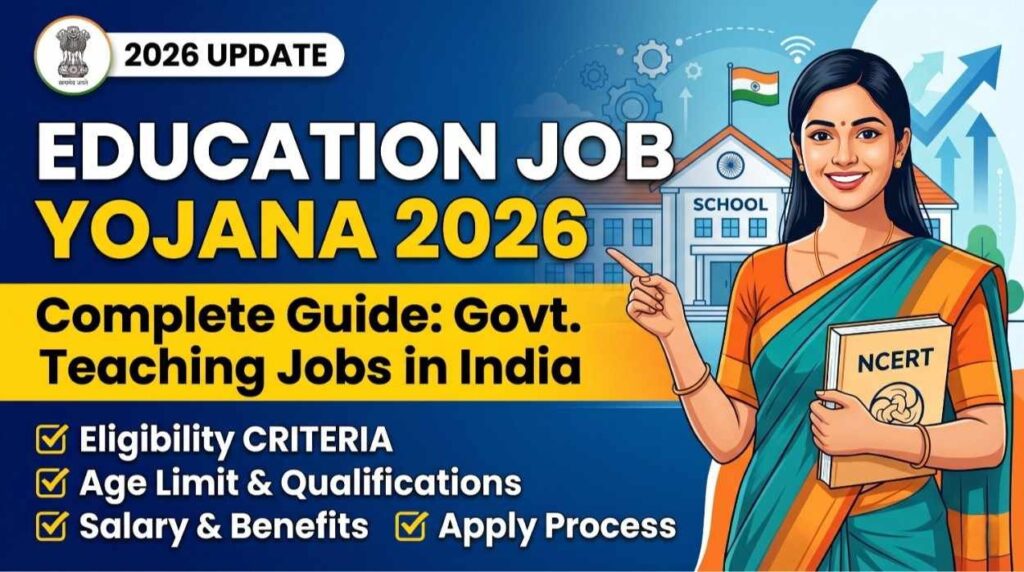
Education Job Yojana 2026: Complete Guide to Government Teaching Jobs in India
Key Takeaways
- Education Job Yojana 2026 covers lakhs of government teaching vacancies across India.
- Top schemes include PM SHRI, KVS, NVS, and SSA with strong salary packages.
- CTET or STET qualification is compulsory for most central and state teaching posts.
- SC/ST/OBC candidates get age relaxation, fee waiver, and reserved vacancy benefits.
- The entire application process is online — no agents, no middlemen, no offline forms.
Introduction
Millions of educated young Indians ask the same question every year — “When will a government teaching job open near me?” The answer in 2026 is simple: Education Job Yojana 2026 has brought one of the biggest waves of teacher recruitment India has seen in years. Central schemes like KVS, NVS, PM SHRI, and SSA are actively hiring — and state governments are following with their own massive recruitment drives. Whether you are a fresh B.Ed graduate or an experienced teacher looking for a better posting, this complete guide covers everything — which jobs are available, who qualifies, what the salary looks like, and exactly how to apply without making a single mistake.
What Is Education Job Yojana 2026?
Education Job Yojana 2026 refers to the full set of government-run teacher recruitment campaigns launched across India in the year 2026. These campaigns are driven by the Ministry of Education, Government of India and supported by individual state education departments.
The yojana focuses primarily on filling teaching vacancies at every level of the public schooling system. Posts that come under this recruitment wave include:
- Primary Teacher (PRT) — Classes 1 to 5
- Trained Graduate Teacher (TGT) — Classes 6 to 10
- Post Graduate Teacher (PGT) — Classes 11 and 12
- Special Educator and Language Teacher posts
- Librarians, counselors, and education support staff
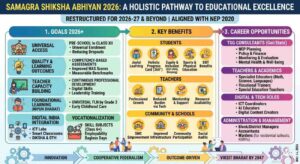
Key schemes driving this recruitment in 2026 are PM SHRI Yojana, Samagra Shiksha Abhiyan (SSA), Navodaya Vidyalaya Samiti (NVS), and Kendriya Vidyalaya Sangathan (KVS). The government’s goal is clear — put a qualified, trained teacher in every classroom across urban and rural India before 2027.
Key Features and Benefits
A government teaching job in 2026 is not just about the salary. It comes with a full package of financial, professional, and personal benefits. Here is what makes it worth pursuing:
- Strong Monthly Salary — Pay scales follow the 7th Pay Commission, starting from ₹35,000 and going up to ₹1,42,400 per month for senior PGT-level teachers.
- Permanent Job Security — Once confirmed after probation, a government teacher cannot be removed without a formal legal process.
- National Pension System (NPS) — All central government teachers contribute to NPS, which gives them a steady income stream after retirement.
- Generous Leave Benefits — Casual Leave, Earned Leave, Summer Vacation, Winter Break, Medical Leave, and Maternity or Paternity Leave are all included.
- Structured Promotions — Teachers move from PRT to TGT to PGT to Vice Principal to Principal through a clearly defined promotion ladder.
- House Rent Allowance (HRA) — Paid monthly based on the posting city category — X, Y, or Z — and can significantly increase take-home pay.
- Social Status and Respect — Government teachers are among the most respected professionals in Indian society, especially in semi-urban and rural communities.
- Child Education Allowance — Central government teachers receive tuition fee reimbursement for up to two children studying in recognized schools.
Eligibility Criteria and Required Documents
Eligibility Table
| Post Type | Min. Qualification | Age Limit |
|---|---|---|
| Primary Teacher (PRT) | 12th Pass + D.El.Ed + CTET Paper 1 | 18–35 years |
| Trained Graduate Teacher (TGT) | Graduate + B.Ed + CTET Paper 2 | 18–35 years |
| Post Graduate Teacher (PGT) | Postgraduate + B.Ed | 18–40 years |
| Special Educator | Graduate + B.Ed Special Education | 18–35 years |
| Librarian / Support Staff | 10th / 12th / Graduate (varies by post) | 18–30 years |
Age relaxation applies — 5 years for SC/ST candidates, 3 years for OBC, and 10 years for PwD candidates.
Required Documents
- 10th and 12th marksheets with passing certificates
- Graduation or postgraduate degree certificate
- B.Ed or D.El.Ed degree certificate
- Valid and qualifying CTET or STET scorecard
- Caste certificate — SC, ST, or OBC (if applicable)
- Aadhaar card as government-approved identity proof
- Recent passport-size photographs as per portal specifications
- Scanned copy of signature in required format and size
- Experience certificate, if required for the specific post
- Active bank account details for application fee payment
How to Apply — Step-by-Step Process
All applications for government teaching jobs under Education Job Yojana 2026 are submitted online. Follow these eight steps carefully:
- Visit the official recruitment website — Open the correct portal for your target scheme: nvs.ac.in for NVS, kvsangathan.nic.in for KVS, or your state’s official school education department website for SSA and state-level posts.
- Find the active 2026 recruitment notification — Go to the “Recruitment,” “Careers,” or “Latest Jobs” section and download the official notification PDF for your preferred post.
- Read the full notification without skipping — Pay special attention to eligibility criteria, reservation policy, exam pattern, important dates, and the application fee structure.
- Create your account with new registration — Click “New Registration,” enter your full name, working mobile number, and email ID, then save your login credentials safely.
- Fill the online application form accurately — Log in and complete all fields including personal information, educational qualifications, category, and teaching experience without leaving any field blank.
- Upload all required documents — Scan and upload your photo, signature, and all certificates in the exact format, size, and resolution mentioned in the notification — wrong formats lead to rejection.
- Pay the application fee online — Use UPI, debit card, credit card, or internet banking to pay. SC/ST candidates are fully fee-exempt in most central government schemes.
- Submit the form and save your confirmation — After clicking “Final Submit,” download the confirmation page immediately and take a printout. Keep it safe until the recruitment process ends.
Pro Tip: Government recruitment portals experience extreme traffic in the final 24 to 48 hours before the deadline. Always submit your application at least 4 to 5 days early to avoid technical errors and server failures.
Top Education Job Schemes Compared (2026)
| Scheme Name | Launched By | Approx. Vacancies | Min. Qualification | Salary Range (₹/month) |
|---|---|---|---|---|
| PM SHRI Yojana | Ministry of Education | 5,000+ | Graduate + B.Ed | ₹44,900 – ₹1,42,400 |
| SSA (Samagra Shiksha Abhiyan) | Dept. of School Education | 20,000+ | 12th + D.El.Ed | ₹35,000 – ₹60,000 |
| NVS (Navodaya Vidyalaya Samiti) | Ministry of Education | 3,000+ | Graduate/PG + B.Ed | ₹44,900 – ₹1,51,100 |
| KVS (Kendriya Vidyalaya Sangathan) | Ministry of Education | 6,000+ | Graduate/PG + B.Ed | ₹44,900 – ₹1,42,400 |
Vacancy numbers are approximate and based on 2026 official notifications.
Frequently Asked Questions (FAQ)
Q1: Who can apply for Education Job Yojana 2026 teaching posts? Any Indian citizen who holds the required educational qualification and falls within the age limit specified in the official notification is eligible to apply. For central government teaching posts under KVS and NVS, candidates from any state in India can apply. For SSA and state-level posts under the sarkari naukri education department, a valid domicile certificate from the concerned state is typically required. Candidates must also hold a valid CTET or STET certificate that has not expired. Always verify each condition in the official PDF before filling the form.
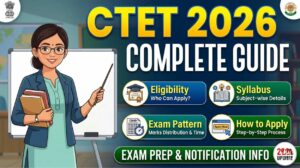
Q2: Is CTET compulsory for all government teaching posts in 2026? Yes, CTET is compulsory for all teaching posts in central government schools, including KVS, NVS, and PM SHRI Yojana schools. CTET Paper 1 is needed for teaching Classes 1 to 5, while CTET Paper 2 qualifies you for Classes 6 to 8. For Classes 9 to 12 posts — TGT and PGT — some schemes require CTET Paper 2 while others only need a postgraduate degree with B.Ed. State government teaching posts require STET teacher eligibility instead of CTET. Non-teaching support posts do not require any teaching eligibility test.
Q3: What is the salary for PM SHRI Yojana teachers in 2026? PM SHRI Yojana jobs follow the 7th Pay Commission pay matrix, which means teachers receive competitive and structured salaries. Entry-level PRT teachers start at approximately ₹44,900 per month. TGT teachers earn between ₹44,900 and ₹70,000 per month, and PGT teachers can draw up to ₹1,42,400 per month including all allowances. In addition to basic pay, teachers receive Dearness Allowance (DA), HRA, Transport Allowance, and medical reimbursement. The actual in-hand salary increases significantly with years of service and posting city category.
Q4: What special benefits do SC/ST/OBC candidates get in teacher recruitment 2026? Reserved category candidates receive multiple layers of advantages in NVS KVS recruitment 2026 and all central schemes. SC and ST candidates get a 5-year age relaxation, meaning the upper age limit is extended to 40 or 45 years depending on the post. OBC candidates receive a 3-year age relaxation. In almost all central government education schemes, SC and ST candidates pay zero application fee. A fixed percentage of total vacancies — typically 15% for SC, 7.5% for ST, and 27% for OBC — is reserved. PwD candidates additionally get a 10-year age relaxation and 4% horizontal reservation.
Q5: How do I get notified instantly about new education vacancy announcements in 2026? The most reliable method is to bookmark official government portals and check them weekly — nvs.ac.in, kvsangathan.nic.in, and education.gov.in are the primary sources for education department vacancy India updates. Set Google Alerts for search terms like “SSA recruitment 2026” or “KVS vacancy 2026” to receive email notifications the moment new results appear. Subscribe to the Employment News published every Saturday by the Ministry of Labour — it lists all major central government vacancies. You can also follow official government social media handles on X (formerly Twitter) for real-time recruitment announcements.
Conclusion
Education Job Yojana 2026 is a genuine, life-changing opportunity for every qualified teacher aspirant in India. With schemes like PM SHRI, KVS, NVS, and SSA actively hiring across thousands of posts, the window is open right now — but it will not stay open forever. Identify the post that matches your qualification, prepare your documents today, clear any pending eligibility test, and submit your application well before the deadline. If this guide helped you, share it with a friend who is also preparing for a government teaching job. Drop your questions in the comments below and visit education.gov.in for all official recruitment notifications directly from the source.